Why Is Indonesian Teak So Valuable?
Home/ Why Is Indonesian Teak So Valuable?
Home/ Why Is Indonesian Teak So Valuable?
Walk into any furniture showroom, hotel lobby, or boat deck around the world, and there's a good chance the wood under your hand travelled thousands of miles from a small island in Southeast Asia. For centuries, teak has been referred to as the "king of woods", and if you investigate its origins, one name consistently emerges: Indonesia.
But why? Is it just clever marketing, or is there something real behind the price tag and the reputation? Turns out, it's real. The value of Indonesian teak isn't a single thing; it's a chain of factors, from biology to geography to how the wood is graded and sold, that all stack up. Let's walk through it.
Before we go to Indonesia, we should learn what teak is and why woodworkers have loved it for generations.
Teak, scientifically known as Tectona grandis, is a tropical hardwood that grows naturally across parts of Southeast Asia. What sets it apart from most woods isn't just its appearance; it's what's happening inside.
High natural oil content, which acts like a built-in sealant against moisture
A dense, tight grain that gives the wood real structural strength
Natural resistance to termites and pests, without any chemical treatment
Very little warping or shrinking, even when temperatures and humidity swing
Put simply, teak was built by nature to survive tough conditions. That's precisely why it's so popular indoors, outdoors, and even at sea. But not all teak trees are equal, and that's where geography starts to matter.
Teak grows in several countries, but Indonesian teak, especially from Java, has earned a reputation that others struggle to match. The reason lies in the conditions of the ground and the sky long before the tree is ever cut.
Java's soil is volcanic, rich in minerals that feed the tree slowly rather than all at once. Combine that with a climate that alternates between distinct wet and dry seasons, and you obtain trees that are, in a sense, forced to work for their growth. That seasonal stress makes the tree grow more slowly and develop a denser, tighter grain, which is precisely the structure that provides teak its strength and its oil-rich character.
There's also history behind teak. Teak cultivation in Java goes back generations, starting with organised plantations established during the colonial era and continuing today under Indonesia's state forestry system. That long, uninterrupted tradition means Indonesian growers have had far more time to refine how teak is planted, managed, and harvested compared to newer teak-growing regions in Africa or Central America, where trees are often grown fast for quick turnover and end up lighter and less durable as a result.
So when people say Indonesian teak is "the best", they're really talking about decades of ideal soil, ideal climate, and an established system built around quality, not just marketing language.
Here's something that rarely gets explained but actually has a giant impact on both the wood's performance and its price: not all parts of a teak tree are the same, and not all teak logs are graded the same way.
Teak is typically sorted into grades:
Grade A comes from the heartwood, the dense inner core of a mature tree. It has the richest oil content, the most consistent colour, and the longest lifespan.
Grade B comes from wood that is closer to the outer trunk. It's still solid, but it has slightly less oil and a bit more variation in colour and grain.
Grade C typically includes sapwood, the outer layer of the tree. It's lighter, less durable, and far more prone to damage over time.
This is a big part of why two pieces of "teak furniture" can look similar in a photo but perform completely differently after a few years outdoors. It's also a big part of why prices vary so much between sellers; genuine grade A teak simply costs more to produce because it comes from mature trees and involves less usable wood per log.
Understanding grading naturally leads to the next question: how do you know the wood you're buying is legitimately and legally sourced in the first place?
This process is where trust becomes essential. Indonesia backs its teak industry with a government-run system called SVLK (Sistem Verifikasi Legalitas Kayu), which essentially tracks the wood's journey from the forest all the way to export.
What SVLK actually does:
Verifies the wood came from a legal, regulated source
Traces the supply chain from planting through harvesting
Is recognised internationally, including under the EU's FLEGT licensing system
For buyers, the certification matters more than it might seem. It means the teak isn't linked to illegal logging or deforestation, which has been a real problem with teak sourced from certain other regions in the past. Choosing certified Indonesian teak isn't just about getting quality wood; it's about knowing exactly where that wood came from.
Certification protects the source. But value isn't just about the wood's origin; it's also about how long it lasts as furniture.
This is where teak's reputation shifts from being "nice wood" to being a "smart investment". Properly sourced Indonesian teak furniture can easily last 30 to 50 years, often with nothing more than occasional cleaning.
Compare that to cheaper woods like mango or pine, which typically need replacing within 5 to 10 years, especially if they're exposed to sun, rain, or humidity. Over a couple of decades, teak often works out cheaper than "budget" wood, simply because you're not buying it again and again.
Minimal maintenance required, even outdoors
Naturally resists rot, mould, and moisture damage
Holds structural integrity for decades
Retains resale value far better than most alternatives
It's the kind of furniture people pass down instead of replacing, which is precisely why teak has a long history as an heirloom material.
Durability alone wouldn't have made teak famous. Its look matters just as much. Freshly cut teak has a warm, golden-brown tone, and over time, especially outdoors, it slowly weathers into a soft silver-grey patina that many people find just as attractive as the original colour.
The grain stays fairly straight and consistent, with very few knots or rough patches, which is part of why it works equally well in a minimalist Scandinavian-style room and a classic, traditional interior. It's rare for a material to be this functional and this good-looking at the same time, and that combination is a big reason designers keep coming back to it.
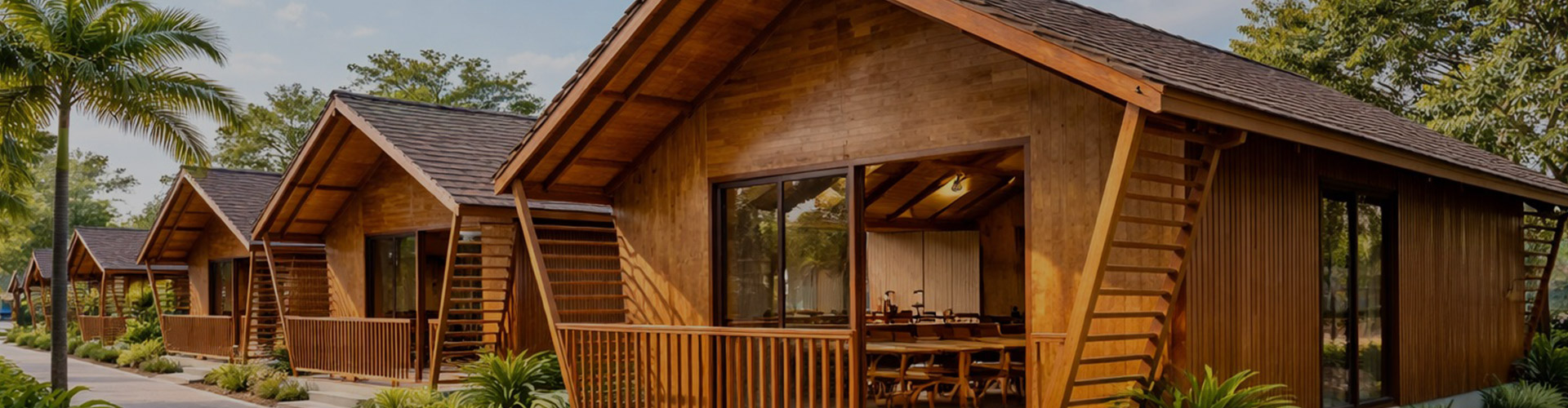
This variety is exactly the kind of teak that goes into a Woodle Wooden Cottage: solid, richly grained, and treated to hold its colour and strength for decades, rather than fading after just a few seasons outdoors. If you've been picturing a space built entirely around this material, it's worth seeing what a cottage made from it actually looks and feels like.
By now the pattern should be clear: Indonesian teak's value comes from a mix of biology, geography, certification, and craftsmanship. When you compare prices between two "teak" products like wooden cottages or furniture, a few specific factors are primarily responsible for the differences:
Tree age: mature, slow-grown trees cost more to produce than fast-grown plantation teak
Grade: Grade A heartwood costs noticeably more than Grade B or C
Source: reclaimed or old-growth teak is rarer and priced accordingly
Craftsmanship: hand-finished joinery and detailing add labour cost but also add years of life to the piece
None of these are hidden secrets, but sellers rarely explain them clearly, which is part of why teak pricing can feel confusing from the outside.
If you're shopping for teak and want to avoid getting an inferior product at a premium price, a few simple checks can help:
Run your hand along the grain; genuine teak often feels slightly oily, not dry or rough
Check the weight; real teak is noticeably dense and heavy for its size
Ask for SVLK documentation; a legitimate seller will have no problem providing it
Look at the color consistency; genuine heartwood tends to be more uniform than mixed-grade wood
Indonesian teak earns its reputation the hard way, through decades of ideal growing conditions, a grading system that rewards patience, government-backed certification, and craftsmanship passed down through generations. It isn't just wood; it's the result of a whole system built around getting it right.
If you're looking for wooden products or wooden cottages that are actually worth the investment instead of something you'll be replacing in a few years, it's worth going straight to the source. Send a quote to our experts and explore our wood collections today, and see the difference that genuine, certified, grade craftsmanship makes in things built to last for decades, not just for seasons.