
The Ultimate Prefab Buyer's Checklist: 10 Things to Ask Before You Buy
Home/ The Ultimate Prefab Buyer's Checklist: 10 Things to Ask Before You Buy
Home/ The Ultimate Prefab Buyer's Checklist: 10 Things to Ask Before You Buy
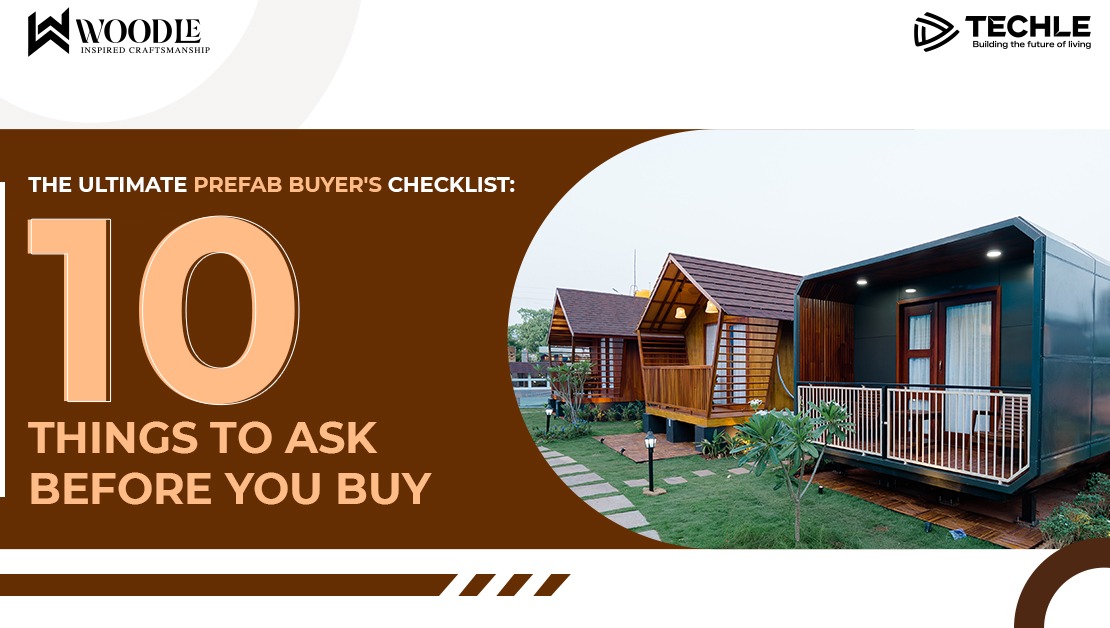
Buying a prefab home feels straightforward on paper. Pick a design, sign a contract, and wait for delivery. In practice, it's much more like buying a car from a catalogue without seeing it first; the details you don't ask about are often the ones that cause problems later.
We've met enough first-time buyers to know that most regrets don't come from picking the wrong floor plan. They come from not asking the right questions before you pay the deposit. A beautifully rendered prefab wooden cottage can turn into a frustrating six-month saga if nobody clarifies what "delivery included" actually means, whether the timber is certified, or what happens if the foundation contractor and the home manufacturer disagree about site readiness.
This checklist isn't about scaring you off prefab construction; if anything, we think it's one of the smarter ways to build right now. It's about making sure you enter the process with a clear understanding so the parts of the experience that should be exciting (choosing finishes and watching your home go from factory to foundation in weeks rather than months) don't get overshadowed by the parts nobody warned you about.
Modular homes and prefab wood homes have shed a lot of their old reputation. They used to be associated with cookie-cutter units and thin walls. Today, prefab wooden cottages are being specified by architects for weekend retreats, and CLT (cross-laminated timber) panels are appearing in mid-rise buildings that would have been steel-and-concrete a decade ago.
The appeal is obvious once you understand the mechanics. Because the structure is built in a controlled factory environment rather than exposed to weather on an open site, tolerances are tighter, waste is lower, and the timeline is far more predictable. A conventional timber-frame build can stretch across a full rainy season with delays nobody could have foreseen. A prefab build, by contrast, moves through fabrication on a schedule that's largely insulated from the weather outside.
But "prefab" is an umbrella term, and the quality gap between manufacturers can be enormous. Two companies can both call their product a "prefab wooden cottage" and mean completely unique things; one might be assembling panels from FSC-certified timber with proper thermal detailing, while the other might be using poor insulation and calling it rustic charm. That's precisely why the questions below matter more than the marketing brochure.
This is the question that separates a well-built prefab wood home from one that only looks the part. Ask specifically about FSC (Forest Stewardship Council), PEFC (Programme for the Endorsement of Forest Certification), or, in Indonesia, SVLK (Sistem Verifikasi Legalitas Kayu, the country's legal timber verification system).
These aren't just feel-good stickers. They're a paper trail proving the wood was harvested legally and sustainably, and they often correlate with better quality control throughout the supply chain. If a manufacturer can't produce documentation on request or gets vague when you push for specifics, treat that as a warning sign rather than an oversight.
Uncertified timber isn't only an ethical concern. It requests original, inconsistent moisture content; unpredictable structural grading; and a supply chain that's harder to trace if something goes wrong later. You want a paper trail you can actually follow, not a verbal assurance.
The headline price for a prefabricated cottage seldom includes all you'll actually pay for. Foundation work, site preparation, utility connections, permits, and transportation to your site are typically priced individually, and they may range from 15% to 40% of the basic price, depending on your region and site circumstances.
Before you become emotionally attached to a number, ask for an itemised breakdown. A reputable builder will walk you through exactly what's bundled into the quoted price and what falls under "site work"; this portion is usually the buyer's responsibility unless negotiated otherwise.
Manufacturers love to quote, "Your home will be built in six weeks." It sounds fantastic. What they often don't mention is that fabrication is just one stage. Design finalisation, permitting, site preparation, transportation, and on-site assembly all add weeks or months to the timeline at either end.
A more honest question is, from the day I sign the contract to the day I can move in, what's the realistic total timeline? Push for a range rather than a single optimistic number, and ask what has caused delays on past projects. Experienced builders will have a straight answer, because they've seen it happen before.
This one gets glossed over more than it should, especially by buyers focused on aesthetics. Ask about the insulation values (often expressed as R-value or U-value depending on your region), the wall assembly thickness, and how the design handles thermal bridging, which are the points where heat can escape through structural connections regardless of how good the insulation itself is.
A well-engineered prefab wooden cottage, particularly one using CLT panels, can perform remarkably well in both hot and cold climates. But performance depends entirely on the details: panel thickness, the quality of the vapour barrier, window specifications, and how carefully the joints between panels were sealed at the factory. Don't assume that wood automatically means warm. Ask for the numbers.
Prefab homes still need a proper foundation, and the cost is one of the most commonly underestimated line items in the entire process. Depending on your soil conditions and local building codes, you might need a full concrete slab, pier-and-beam supports, or a screw-pile foundation, each with a different cost and timeline.
It’s important to clarify early whether the manufacturer handles foundation work directly, subcontracts it, or expects you to hire someone independently. Misalignment here is one of the most common causes of delivery delays, because a home can't be set until the foundation has cured and passed inspection.
Renderings are marketing tools. They're designed to look flawless, and they usually do. What you actually want is to see (or video-call through) a completed cottage that's a year or two old, ideally in a climate similar to yours. Ask how the timber has weathered, whether the joints have shifted, and how the owners describe their experience with the company after the sale.
If a manufacturer can only show you brand-new units straight off the line, that's not necessarily a red flag; newer companies exist, but it does mean you're taking more of a leap of faith, and it's worth factoring that into your decision.
Warranties on prefab wood homes vary widely, and the fine print matters more than the length of coverage advertised. Ask specifically what's covered: structural elements, the building envelope, finishes, and any mechanical systems installed at the factory. Then ask what voids the warranty; improper site drainage and unauthorised modifications are common exclusions that can surprise buyers.
It's also worth asking how warranty claims are handled logistically, especially if the manufacturer isn't based near your site. A warranty is only useful if the process for using it is realistic.
Depending on the design, a prefab cottage might arrive as a single transportable module or as a set of panels assembled on-site. Ask about the logistics: what kind of road access your site needs, whether a crane is required, and how long on-site assembly typically takes once the pieces arrive.
This question matters most if your site is remote or has tricky access; a narrow mountain road or a lot with overhead power lines can complicate delivery in ways that are much easier to plan for in advance than to discover on delivery day.
"Prefab" doesn't have to mean "identical". Many manufacturers offer meaningful flexibility in layout, window placement, exterior cladding, and interior finishes, while keeping the structural panel system standardised for efficiency. Others offer far less room to manoeuvre than their marketing suggests.
Ask directly: Which parts of the design are fixed, and which parts can you actually change? Understanding this upfront helps you avoid the disappointment of falling in love with a floor plan, only to discover that the layout is non-negotiable.
Every construction project runs into something unexpected: a permitting delay, an unanticipated site condition, or a shipment held up in transit. What separates a competent builder from a frustrating one isn't whether problems happen; it's how they communicate and resolve them when they do.
Ask how the company handles delays, who your point of contact will be throughout the build, and how it typically resolves disputes. A builder who answers this question thoughtfully, rather than brushing it off with "That won't happen to you," is usually one who's dealt with it honestly before.
None of these ten questions are meant to be a test the manufacturer has to pass perfectly. Real projects have trade-offs, and a good builder will be upfront about where those trade-offs are rather than pretending they don't exist. What you're really evaluating is transparency: whether the person across the table is willing to give you clear answers about certification, pricing, timelines, and what happens when things don't go as expected.
Prefab wooden cottages and modular homes have earned their growing popularity for good reason: faster timelines, tighter quality control, and a building process that's far more predictable than traditional construction. But that predictability only holds if you've asked the right questions before you sign. Walk in with this checklist, take notes as you go, and you'll be in a much stronger position to tell the difference between a builder who's confident in their process and one who's hoping you won't ask too many questions.
If you're at the stage of comparing options, it's worth reaching out directly to a few wooden cottage manufacturers, such as Techle Indo Innovation, with this exact list. The way we respond will tell you almost as much as the answers themselves.